
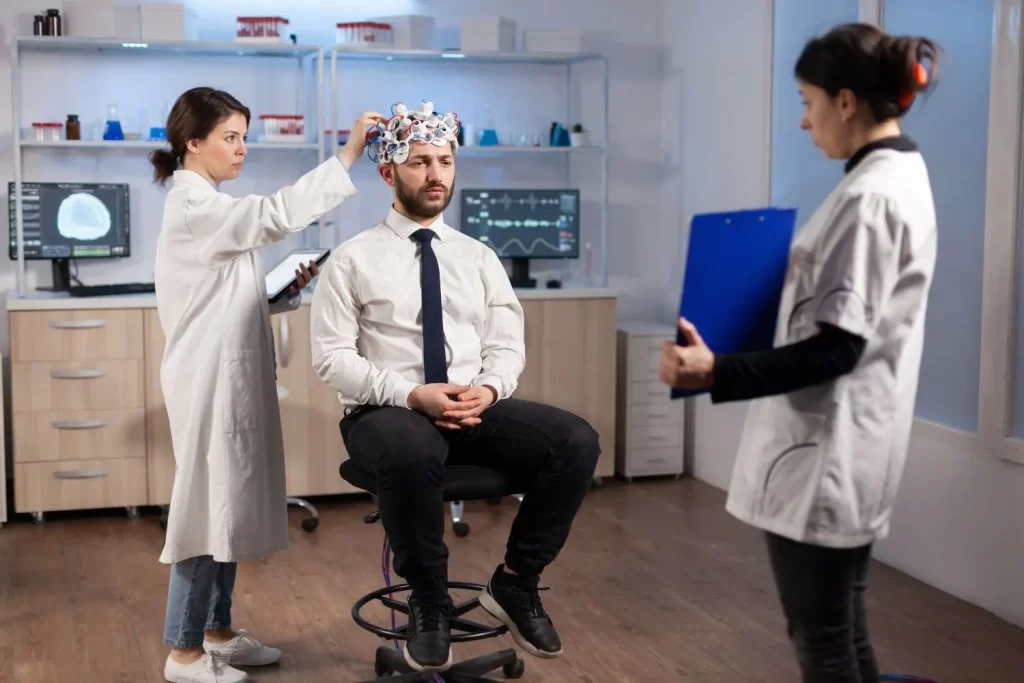




Your brain controls everything. Memory, mood, focus, decision-making. When something feels off, doctors need a clear picture of what is actually happening inside. That is exactly what neuropsychiatric testing delivers. It is a structured, science-backed process that maps how your brain thinks, feels, and behaves.
What Is Neuropsychiatric Testing, in plain terms, is a series of carefully designed tasks and questions that measure your mental functions. A trained specialist then reads those results to understand your cognitive strengths and weaknesses, and build a path forward.
What Does Neuropsychiatric Testing Evaluate?
What does neuropsychiatric testing evaluate comes down to one core question: how well is your brain working right now?
A neuropsychological evaluation looks at multiple areas at once. These include attention, memory, language, reasoning, problem solving, and emotional functioning. It also checks processing speed, which is how fast your brain receives and responds to information. No single brain scan can do all of this. That is why this type of testing matters.
Tests also measure cognitive behavioral patterns, fine motor control, and how well you understand visual and spatial relationships. The goal is a full picture, not just a snapshot.
How Neuropsychiatric Assessment Works for Mental Health Diagnosis
How neuropsychiatric assessment works for mental health diagnosis involves more than a simple questionnaire.
A licensed neuropsychologist meets with you for several hours, sometimes across two sessions. You complete paper-based and computer tasks designed to test specific brain functions. There is no blood draw, no needles. The tasks feel a bit like puzzles, memory games, and simple drawing exercises.
Your test results are then compared to people of your same age, education level, and background. This comparison reveals if your performance falls within a normal range or shows signs of cognitive deficits. The whole process is grounded in decades of clinical research.
According to Yale Medicine, a neuropsychological assessment typically takes around four hours and requires no special preparation from the patient.
Purpose of Neuropsychiatric Testing in Cognitive and Behavioral Disorders
Purpose of neuropsychiatric testing in cognitive and behavioral disorders is threefold: diagnosis, planning, and monitoring progress.
First, it helps clinicians determine an accurate diagnosis. Conditions like Alzheimer disease, Parkinson disease, traumatic brain injury (TBI), and brain tumors all affect the brain differently. Testing reveals those differences clearly. It also helps separate overlapping conditions, like depression-related memory loss versus early-stage dementia.
Second, it supports building a strong treatment plan. Knowing your exact strengths and weaknesses allows providers to recommend targeted therapies, school adjustments, or workplace accommodations.
Third, it tracks changes over time. If a patient gets treated for a traumatic brain injury TBI, repeat testing shows whether the brain is recovering or declining.
Who Needs Neuropsychiatric Testing and Why It Is Important
Who needs neuropsychiatric testing and why it is important depends on the situation, but several groups clearly benefit.
Adults noticing memory lapses, unexplained mood changes, or difficulty concentrating may be candidates. Children struggling in school with focus or learning gaps linked to possible mild intellectual disability or attention disorders also benefit greatly. People experiencing persistent anxiety, severe depression signs, mood swings affecting life, or unusual behavioral shifts should speak with a provider about an evaluation.
Anyone with a history of stroke, epilepsy, chemotherapy, or brain surgery may also need baseline testing. Athletes in contact sports often get tested before a season so providers can compare results after a potential injury.
Knowing when to see a psychiatrist versus a neuropsychologist matters here. A psychiatrist focuses on medication management for conditions like high functioning OCD or ADHD paralysis. A neuropsychologist performs the structured cognitive testing. Often, both work together.
What Conditions Can Neuropsychiatric Testing Identify?
This testing identifies a broad range of conditions. These include Alzheimer disease, Parkinson disease, traumatic brain injury TBI, ADHD, autism spectrum disorder, brain tumors, stroke effects, and learning disabilities. It also helps assess the severity of depression, bipolar disorder, and anxiety disorders that affect thinking.
In children, it can identify processing differences tied to possible mild intellectual disability or developmental delays. In adults, it can separate high functioning OCD from anxiety-driven perfectionism, or differentiate ADHD paralysis from depression-linked executive dysfunction.
For anyone wondering about psychiatrist vs psychologist or who can prescribe medication, neuropsychiatric testing is typically ordered by psychiatrists, neurologists, or primary care doctors. The testing itself is performed by psychologists with specialized training. Psychiatrists then use those results to guide treatment recommendations, including whether therapy vs psychiatric care or a combination is best.
Common Types of Neuropsychiatric Tests
This is a section competitors consistently skip. Knowing specific test names helps you understand what your clinician is actually measuring during a cognitive assessment.
- Mini-Mental State Exam (MMSE): A quick 30-point screen for cognitive decline, often the first step
- Neuropsychiatric Inventory (NPI): Rates behavioral symptoms across 12 areas including agitation, depression, and hallucinations
- Montreal Cognitive Assessment (MoCA): Detects mild cognitive impairment missed by simpler screens
- Hamilton Anxiety/Depression Scale: Measures severity of anxiety and depression symptoms
- MMPI (Minnesota Multiphasic Personality Inventory): One of the most widely used personality and psychopathology assessments
- Brief Psychiatric Rating Scale (BPRS): Used for serious conditions like Schizophrenia and psychotic disorders
- Conners Rating Scale: Common in neuropsych testing for ADHD when attention symptoms are a concern
How Does This Testing Differ From a Standard Psychiatric Evaluation?
A standard psychiatric evaluation focuses mainly on symptoms, history, and medication needs. Neuropsychiatric testing adds a layer of objective, measurable data about how your brain actually performs tasks.
Think of it this way. A psychiatrist might diagnose depression based on reported symptoms. A neuropsychological evaluation shows exactly which cognitive areas that depression is affecting, such as memory, focus, or processes information speed. Together, those two assessments form a far stronger treatment plan.
PTSD coping skills training, group therapy for anxiety, and cognitive rehabilitation programs all benefit from this detailed data. The more precise the picture, the more targeted the help.
How Long Does Neuropsychiatric Testing Take?
- Adults: 1 to 4 hours depending on the scope of testing
- Children: May be split across 2 or more sessions
- Results turnaround: Typically 1 to 2 weeks for a full written report
- Telehealth evaluations: Initial sessions often take 60 to 90 minutes
A focused neuropsychiatric evaluation unlike a full neuropsychological evaluation is designed to be efficient. You do not need to spend a full day completing tasks if the clinical question is specific.
How Much Does Neuropsychiatric Testing Cost?
Cost is one of the top questions people search for and most competitor articles skip it. Here is an honest breakdown:
- US average: $500 to $5,000+ depending on scope and provider
- Insurance coverage: Often approved when medically necessary ask your insurer before booking
- Medicare and Medicaid: May cover evaluations when ordered by a physician
- Telehealth evaluations: Generally cost less than in-person assessments
- Sliding scale fees: Ask if your provider offers income-based pricing
If you are comparing options, know that a telehealth-based evaluation from a licensed provider can reduce travel time and often lowers the total cost without sacrificing quality.
How to Prepare for Your Neuropsychiatric Testing Appointment
- Get a full night of sleep fatigue genuinely impacts cognitive performance
- Bring a complete list of your current medications and dosages
- Bring any past medical records, especially brain scans or prior psychiatric evaluations
- Avoid alcohol for at least 24 hours before the evaluation
- Do not study or practice this is not a school test and rehearsed answers reduce accuracy
- Eat a normal meal beforehand low blood sugar affects concentration
If someone in your life is wondering how to survive living with a narcissist or managing a family member with severe mood swings, helping them prepare for an evaluation like this is one of the most concrete things you can do. A diagnosis changes everything.
MRSC Solutions: Neuropsychiatric and Mental Health Support in West Palm Beach
At MRSC Solutions, we understand that getting the right diagnosis is the first step toward real recovery. Our team supports patients through comprehensive mental health evaluations, including our ADHD Treatment West Palm Beach program designed to identify and address attention-related challenges with precision.
Whether you are dealing with severe depression signs, mood swings affecting life, persistent anxiety, or concerns about cognitive changes, MRSC Solutions provides the expert guidance you need. We connect evaluation findings directly to personalized care plans, including referrals for therapy vs psychiatric care when needed.
Should You Consider Neuropsychiatric Testing?
If you or someone you care about is dealing with symptoms that do not respond to standard treatment or if a diagnosis still feels unclear what is neuropsychiatric testing may be is exactly the question worth asking. This evaluation connects the dots between brain function and mental health. It leads to more precise diagnoses and treatments that are actually matched to your neurology, not just your symptoms.
At MRSC Solutions, our team provides psychiatric evaluations and ADHD Diagnosis and Treatment in West Palm Beach, available via telehealth across Florida. You do not need to travel to get a thorough evaluation. Contact Us now to book your appointment today and get the clarity your health deserves.
Frequently Asked Questions
What is the difference between neuropsychiatric testing and a regular mental health evaluation?
A regular mental health evaluation focuses on symptoms and feelings. Neuropsychiatric testing measures how your brain actually performs specific tasks like memory, attention, and problem solving. It gives doctors objective, data-backed results instead of just self-reported symptoms.
How long does a neuropsychiatric evaluation take?
Most evaluations take between three to six hours. Some complex cases may be split across two separate sessions. The length depends on the number of tests ordered and the conditions being assessed.
Does neuropsychiatric testing hurt or require any medical procedures?
No. There are no needles, scans, or physical procedures involved. You simply complete a series of tasks, puzzles, and memory exercises with a trained neuropsychologist. It is completely non-invasive.
Who can refer me for neuropsychiatric testing?
Your primary care doctor, psychiatrist, or neurologist can refer you. In some cases, a school psychologist may recommend testing for children showing learning or behavioral difficulties.
Will my insurance cover neuropsychiatric testing?
Many insurance plans cover neuropsychiatric testing when it is medically necessary. Coverage depends on your specific plan and the reason for the referral. Always check with your provider before scheduling.
Can neuropsychiatric testing diagnose ADHD in adults?
Yes. It is one of the most reliable ways to identify ADHD paralysis patterns, attention deficits, and executive function problems in adults. Results help guide accurate diagnosis and the right treatment plan.
How should I prepare for a neuropsychiatric evaluation?
Get a good night of sleep before your appointment. Eat a proper meal. Bring your medical records, a list of medications, and any previous evaluation reports. Avoid alcohol or sedative medications unless your doctor advises otherwise.
What happens after I receive my neuropsychiatric test results?
Your neuropsychologist writes a detailed report covering your strengths and weaknesses, a diagnosis if supported, and specific treatment recommendations. This report is shared with your referring doctor to guide your next steps in care.
Can children take neuropsychiatric tests?
Yes. Testing is available for children as young as three years old. It is commonly used to identify learning disabilities, mild intellectual disability, autism spectrum disorder, and ADHD in school-age children.
Is neuropsychiatric testing the same as a brain scan or MRI?
No. A magnetic resonance imaging scan shows the physical structure of your brain. Neuropsychiatric testing shows how your brain functions in real tasks. Both provide different and often complementary information about brain health.