
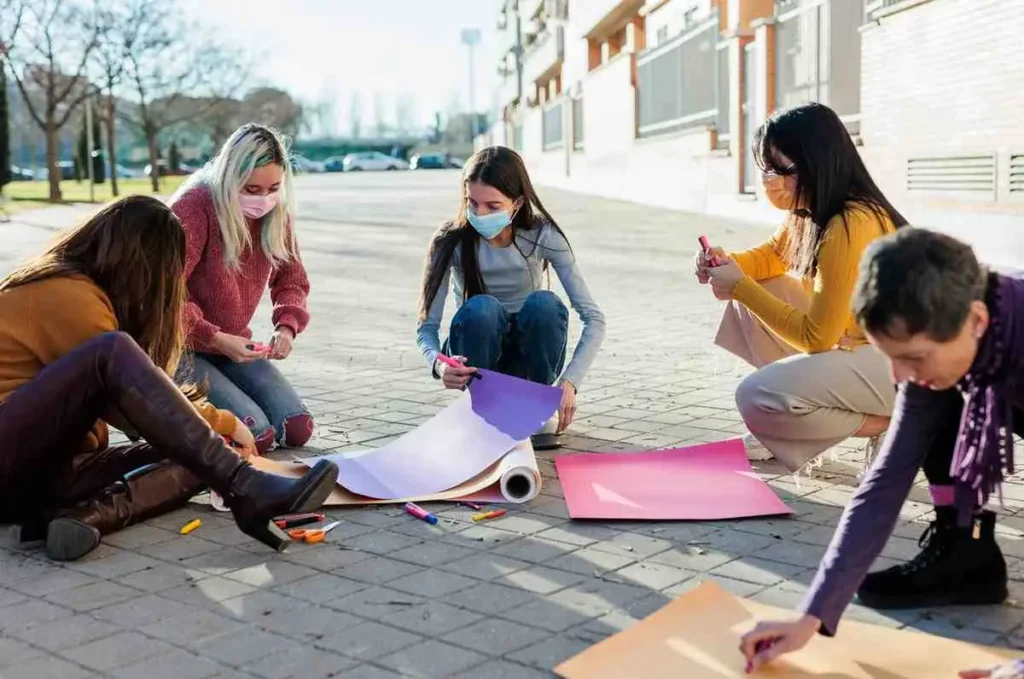




Teen mental health is no longer a quiet concern. It is a visible, urgent issue that touches nearly every family, school, and community. Mental health activities for teens are not a trend. They are a practical response to a real crisis that is still growing. The teen mental health statistics 2026 confirm this: about 32% of adolescents now experience an anxiety disorder, and suicide is the second leading cause of death for young people aged 10 to 14.
Parents, counselors, and teachers often ask: what can we actually do? This guide answers that directly. It covers self-care activities for teens, signs that something is seriously wrong, and when professional support is necessary. If you have been looking for something that is honest and useful, you are in the right place.
How to Choose Effective Mental Health Activities
Not every activity works for every teen. A teen dealing with teen anxiety needs different support than one experiencing low mood from adolescent depression.
Matching activities to needs:
- For anxiety: breathwork, grounding, and movement-based resets
- For depression: behavioral activation, journaling, and outdoor movement
- For emotional overwhelm: creative expression and social connection activities
- For focus and cognitive stress: puzzle-based tasks and strategy games
How often should teens practice? Research supports daily short sessions over weekly long ones. Even 10 to 15 minutes of intentional self care activities for teens improves outcomes over time.
Personalization matters: Teens who choose their own activities are far more likely to stick with them. Offer options, not mandates.
Related: Teen Mental Health Statistics 2026
Mindfulness and Relaxation Activities
Mindfulness activities for teenagers are among the most researched and clinically supported tools for reducing stress management challenges in adolescents.
1. Mindful Breathing and Grounding Exercises
Deep breathing activates the parasympathetic nervous system, slowing the heart rate and quieting racing thoughts. The 5-4-3-2-1 grounding technique is especially useful during panic or overwhelm.
How to practice:
- Name 5 things you can see
- Name 4 things you can touch
- Name 3 things you can hear
- Name 2 things you can smell
- Name 1 thing you can taste
This pulls attention back to the present moment, disrupting the spiraling meaning mental health loop where one anxious thought feeds the next.
Box breathing (inhale 4 counts, hold 4, exhale 4, hold 4) is a therapist-recommended strategy used in clinical anxiety treatment settings, including at MRSC Solutions.
2. Meditation and Present-Moment Awareness
Even five minutes of daily meditation reduces cortisol levels in teens. Apps like Headspace or Calm offer guided sessions designed for young people.
Mindfulness training builds the mental muscle to observe thoughts without reacting to them. This directly targets negative thoughts that fuel anxiety and low mood.
3. Progressive Muscle Relaxation
This technique involves tensing and releasing each muscle group from toes to forehead. It teaches teens to recognize physical tension as a stress signal.
Step-by-step:
- Sit or lie comfortably
- Tense your feet for 5 seconds, then release
- Move upward through calves, thighs, stomach, hands, shoulders, and face
- Breathe slowly throughout
This is one of the most effective relaxation techniques for behavioral health management in teens.
Creative Expression Activities
Creative expression gives teens a non-verbal outlet for emotions they cannot yet articulate. These therapy ideas for teenagers are used in both clinical and school settings.
4. Art and Drawing for Emotional Release
Emotion drawings, mood mapping, and feeling collages help teens externalize internal states. A teen who cannot say “I feel helpless” may express it clearly through color and form.
This supports emotional well-being by creating distance between the teen and the feeling a core concept in cognitive behavioral techniques.
5. Journaling and Mood Logging
Journaling is one of the most accessible self care activities for teens. It builds self-regulation by creating a habit of reflection.
Useful prompts include:
- “What made me feel overwhelmed today?”
- “What is one thing I am grateful for?”
- “What triggered my mood change?”
Regular mood logging helps teens and therapists identify patterns over time, supporting mental health support planning.
Extra Reading: EMDR Certified Therapists
6. Music and Movement
Music playlists tied to mood help teens process emotions safely. Upbeat music before school can shift emotional state. Slower music during journaling supports reflection.
Dancing as an emotional release is supported by somatic therapy research. It reduces cortisol, improves emotional well-being, and creates a sense of control over one’s body critical for teens who feel emotionally out of control.
Movement-Based Activities
Physical activity is one of the strongest natural antidepressants available to teens. It increases dopamine, serotonin, and BDNF, a protein that supports brain health.
7. Walking and Nature Time
Research consistently shows that time in natural environments lowers cortisol and reduces teen anxiety symptoms. Even a 20-minute walk outside improves mood.
For teens who resist structured activity, a walk with a parent or pet is a low-barrier entry point into mental wellness activities for youth.
Family involvement in mental and emotional health is a proven protective factor. Walking together opens space for natural conversation without the pressure of a formal check-in.
8. Yoga and Stretching
Yoga combines breathwork, physical movement, and present-moment awareness making it uniquely effective for teens managing both physical tension and emotional stress.
Simple poses like child’s pose, cat-cow, and forward fold can be practiced in a bedroom in under 10 minutes. This mind-body connection supports self-regulation and nervous system calming.
9. Team or Group Physical Activity
Non-competitive team activities like recreational volleyball, group hikes, or community fitness classes offer a dual benefit. They provide physical activity while also addressing social isolation.
Peer support through shared physical experience is one of the most effective ways to reduce adolescent depression symptoms. Social connection, even brief, triggers oxytocin release and reduces emotional pain.
Cognitive and Coping Skill Activities
10. CBT-Style Thought Challenging
Cognitive behavioral techniques teach teens to identify and reframe negative thoughts. This is the foundation of CBT the most evidence-based treatment for teen anxiety and adolescent depression.
A simple exercise:
- Write down the anxious thought
- Ask: “Is this fact or opinion?”
- Write an alternative, realistic thought
This builds coping mechanisms that last well beyond any single session. Group therapy for anxiety often uses this format with teens in a small group setting for shared accountability and learning.
Extra Reading: 25 Proven PTSD Coping Skills
11. Self-Care Challenges and Habit Trackers
A self-care activities for teens bingo card makes wellness feel achievable. Squares might include: drink 8 glasses of water, go to bed before 10pm, write three gratitudes, do 10 minutes of stretching.
Daily mental health habits for teens are more sustainable when gamified. Screen-time routines and sleep hygiene are foundational poor sleep worsens both teen anxiety and adolescent depression significantly.
12. Puzzle and Focus Games
Strategy games, puzzles, and building activities engage the prefrontal cortex and create a healthy distraction from emotional spiraling. These mental health tools are used in classroom mental health activities as well as at home.
Activities for Social Connection
Teens who feel connected to others family, peers, or community show significantly lower rates of adolescent depression and suicidal ideation.
Peer mentoring programs pair older teens with younger ones, creating purpose, responsibility, and belonging. Schools that implement peer support report measurable improvements in social emotional learning activities for teens.
Family involvement in mental and emotional health matters at home too. A weekly family creative night cooking together, playing a board game, or watching a documentary builds the attachment bond that buffers stress.
Group therapy activities for teens in clinical settings extend this connection into structured peer processing. Group therapy for anxiety in particular helps teens realize they are not alone in their experience, one of the most powerful interventions for reducing shame and isolation.
A Practical Weekly Routine Built Around Mental Health Activities for Teens
Here is what a real week might look like for a teen building better mental health habits:
Monday through Friday: 20 minutes of physical movement, five minutes of journaling, and no social media for the hour before sleep.
Weekends: One meaningful social activity, one creative outlet, and at least one honest conversation with a trusted adult.
This is not a prescription. It is a starting point. Mental health activities for teens work best when they are chosen, not forced. Let the teen pick the activity. The habit is what matters, not the specific form.
What to Do When a Teen Refuses Help
Many teens resist structured activities especially if they feel they are being “fixed.” This is common and does not mean the teen cannot benefit.
Strategies that work:
- Offer choice, not assignment: “Would you rather journal or take a walk?”
- Start small: a 5-minute activity is better than none
- Do it alongside them: teens respond better when caregivers participate
- Use peer influence: involve a trusted friend or sibling
The goal is to reduce the activation barrier. Activity for teens should feel like an invitation, not an intervention.
Recognizing When Activities Aren’t Enough

Mental health activities are supportive tools not substitutes for clinical care.
Seek professional help if your teen:
- Expresses hopelessness or talks about death
- Withdraws completely from friends and family
- Shows sudden changes in sleep, appetite, or grades
- Engages in self-harm or risky behavior
- Shows symptoms that have lasted more than two weeks
If you see these signs, MRSC Solutions offers specialized Anxiety Treatment West Palm Beach services, including licensed psychiatric evaluations, therapy, and telehealth for teens and families. Accessing early mental health support prevents escalation and shortens recovery time.
Spiraling meaning in a mental health context refers to a thought pattern where one worry triggers another, creating a cycle of increasing distress. If your teen cannot break that cycle with activity alone, professional behavioral health intervention is the appropriate next step.
What the Adolescent Mental Health Statistics 2026 Tell Us About Prevention
Prevention is easier than treatment. The adolescent mental health statistics 2026 show that teens with strong family support have a depression prevalence of 2.5%, compared to 7.8% in those without it. That gap is enormous. And it is almost entirely shaped by communication, consistency, and connection.
Parents do not need to become therapists. They need to stay curious, stay present, and reduce shame around hard conversations. Asking “how are you really doing” once a week, and meaning it, matters more than most parents realize.
Schools play a role too. The teen mental health trends 2026 show that school-based mental health programs that include skill-building, counseling access, and anti-stigma education significantly improve help-seeking rates. California has already mandated mental health days for students. Other states are following.
Pro Tips for Parents and Caregivers
Family involvement in mental and emotional health is one of the strongest predictors of teen recovery and resilience.
Practical guidance:
- Model the activities yourself: Teens watch what adults do, not just what they say.
- Set a consistent routine: Same time, same space builds habit without pressure.
- Avoid forcing disclosure: Let the activity create space for conversation naturally.
- Celebrate consistency, not perfection: Showing up five days out of seven is progress.
- Communicate openly with school counselors about what is working at home.
Conclusion
Supporting teen mental health starts with small, consistent actions taken daily. The mental health activities for teens in this guide are not just feel-good suggestions. They are backed by clinical evidence and used by therapists worldwide. Whether your teen is dealing with stress management challenges, low mood, or social anxiety, there is an activity that fits.
Start where your teen is comfortable, build from there, and remember that asking for help is a sign of strength. If your teen needs more than activities can offer, MRSC Solutions is here. Contact us today to explore professional Anxiety Treatment West Palm Beach and other mental health support services designed specifically for teens and families.
FAQs
Do mental health activities really help teens?
Yes. Research supports that consistent mental health activities reduce symptoms of anxiety, depression, and emotional dysregulation in adolescents. They are most effective when matched to the teen’s specific needs and practiced regularly.
How often should a teen practice these activities?
Daily practice of 10 to 20 minutes produces the best results. Short, consistent sessions outperform occasional long ones.
Can parents lead these activities at home?
Absolutely. Most self care activities for teens require no special training. Journaling, breathing exercises, yoga, and walking are all accessible without clinical support. However, a therapist can provide structured guidance when symptoms are more severe.
What are the best activities for teen anxiety specifically?
Deep breathing, progressive muscle relaxation, grounding techniques, and mindfulness activities for teenagers are among the most clinically validated tools for teen anxiety management.
What is spiraling in mental health terms?
Spiraling refers to escalating anxious or depressive thought loops that feed on themselves. Grounding exercises, journaling, and cognitive behavioral techniques are effective tools to interrupt this cycle.