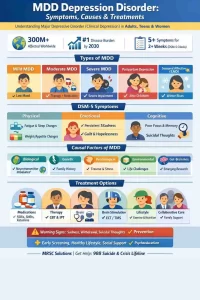

Many people struggle in silence. Stress grows. Mood drops. Sleep shifts. You may ask yourself, “Is this normal, or do I need help?” Knowing When to See a Psychiatrist can protect both your mental and physical health.
If you have searched “when should i see a psychiatrist” or “when should you see a psychiatrist,” you are not alone. Adults between 25 and 45 often delay care until work, family, or health begins to suffer. This guide gives you clear answers so you can act with confidence.
What Is a Psychiatrist and What Do They Do?
A psychiatrist is a medical doctor trained to diagnose and treat mental health conditions. who can prescribe medications and manage complex cases.
They assess both mental and physical symptoms. Many mental illnesses connect to physical health problems like thyroid imbalance or chronic pain. A psychiatrist reviews your full history before building a treatment plan.
They may provide medication management, therapy referrals, and long-term care for serious mental health conditions.
Psychiatrist vs Therapist vs Psychologist
People often ask “when should you see a psychiatrist instead of a therapist?”
Here is a simple breakdown:
- Psychiatrist: A medical doctor who can prescribe medications and conduct a full psychiatric evaluation.
- Psychologist: Provides testing and therapy but usually cannot prescribe medication.
- Therapist: Offers talk therapy such as cognitive behavioral therapy cbt for stress, trauma, or anxiety.
If symptoms are severe, long-lasting, or include mood swings, psychosis, or suicidal thoughts, you may need psychiatric care. If symptoms are mild, therapy alone may help. Many patients use both therapy and psychiatric care together.
Common Conditions Psychiatrists Treat
Psychiatrists manage a wide range of mental illnesses. These are not character flaws. They are health conditions that need proper care.
Mood Disorders
This includes depression anxiety and bipolar disorder. Mood disorders affect energy, focus, and daily drive. Untreated symptoms can strain work and relationships. A psychiatrist can assess severity and recommend therapy, medication, or both.
If you are asking, “when should i see psychiatrist for mood swings?” the answer is simple: when they last more than two weeks or disrupt life.
Anxiety Disorders
An anxiety disorder goes beyond normal stress. It may include panic attacks, racing thoughts, or constant worry. Changes in sleep patterns are common. Some people benefit from Group Therapy for Anxiety: alongside medication support.
ADHD and Behavioral Concerns
Adults and teens with focus issues may need formal testing. In some cases, clinicians recommend What Is Neuropsychiatric Testing? This testing clarifies attention, memory, and executive function concerns.
PTSD, OCD, and Psychosis
Trauma can lead to PTSD. Obsessions and compulsions may signal OCD. Hallucinations or delusions require urgent care. These are serious mental health issue categories that demand professional treatment.
Staying informed through trusted sources and Teen Mental Health News can help families spot early warning signs.
Clear Signs It’s Time to See a Psychiatrist
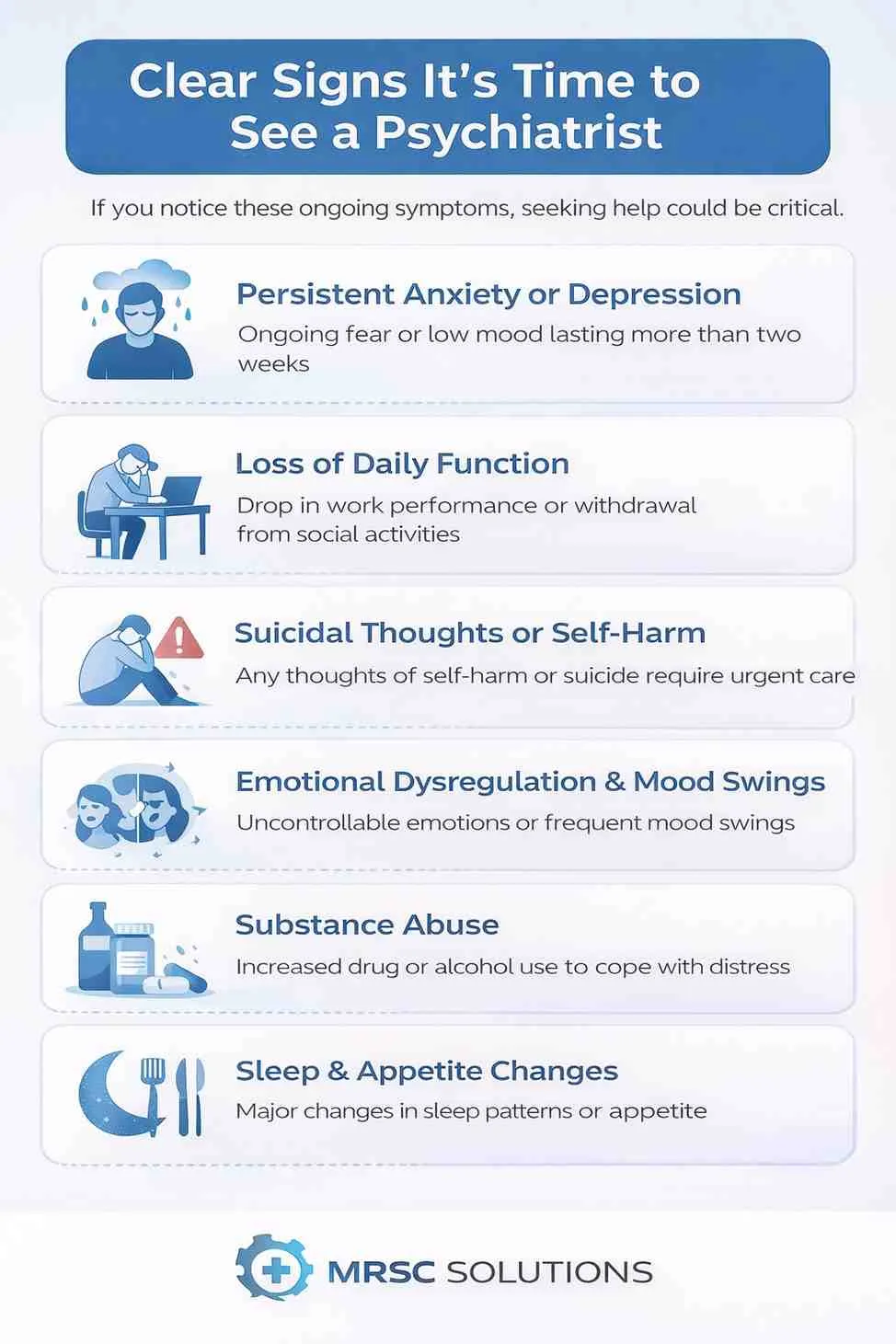
Many patients delay help because they hope symptoms will pass. Here are clear signs that answer When to See a Psychiatrist.
Persistent Anxiety or Depression
A low mood or fear lasting more than two weeks is not “just stress.” If sadness feels heavy every day, it is time to consider care.
Loss of Daily Function
If work performance drops or you withdraw from friends, take it seriously. Trouble managing daily tasks is a red flag.
Suicidal Thoughts or Self-Harm
Any thoughts of harming yourself require immediate help. This is not a wait-and-see issue. It is the clearest sign of when to seek professional help.
Emotional Dysregulation and Mood Swings
If emotions feel out of control, or others say you are acting unlike yourself, seek support. Loved ones often notice signs when someone is spiralling?.
Substance Abuse
Increased alcohol or drug use may signal deeper distress. Substance abuse often coexists with other mental health conditions.
Sleep and Appetite Changes
Major shifts in sleep patterns or appetite can reflect depression or anxiety. These changes also affect physical health, which shows how linked mental and body health truly are.
When to Seek Urgent Psychiatric Help
Emergency care is needed if you have:
- Active suicidal intent
- Plans to harm others
- Severe psychosis
- Extreme self-neglect
In these cases, go to the nearest emergency room or call emergency services. Quick action can save lives.
What Happens in a Psychiatric Evaluation?
Fear of the unknown stops many people. A first visit is structured and respectful.
A psychiatrist completes a detailed psychiatric evaluation. You will discuss symptoms, medical history, family history, and stressors. Lab tests may be ordered to rule out thyroid or vitamin issues.
The mental health assessment also reviews mood, thinking, memory, and behavior. This process helps create a clear treatment plan.
Treatment may include therapy referrals, lifestyle guidance, or medication. Ongoing medication management ensures safe dose changes and monitoring.
Understanding this process often reduces anxiety about When to See a Psychiatrist.
How Early Intervention Improves Outcomes
Early care leads to better control of symptoms. It reduces relapse risk. It protects career stability and family life.
Research from the National Institute of Mental Health shows untreated depression increases long-term health risks. The American Psychiatric Association also supports combined therapy and medication for moderate to severe cases.
Family involvement in Mental and Emotional Health? plays a major role. Supportive relatives help patients stick to treatment and notice warning signs early.
Telepsychiatry and Access to Care
Busy professionals often delay visits due to time limits. Telehealth removes this barrier.
MRSC Solutions provides private virtual psychiatric care across Florida, New York, and Arizona. If you need Depression treatment West Palm Beach, our team offers evaluations and ongoing support from home.
Telepsychiatry is evidence-based and widely accepted. It increases access while protecting privacy.
Next Steps: What to Do If You Think You Need Help
Make a short list of symptoms. Note how long they last. Track changes in mood, energy, and sleep patterns.
Ask yourself:
- Are symptoms affecting work or family?
- Have I tried coping skills without relief?
- Am I worried about safety?
If yes, it is time to act.
Get Your Free Consultation because we provide full evaluations, clear diagnoses, and tailored care plans. Our approach focuses on privacy, respect, and measurable progress.
Conclusion
Knowing When to See a Psychiatrist can protect your future. Early care improves stability and quality of life. Mental health is health. If symptoms disrupt daily function, do not wait. Contact MRSC Solutions today to schedule a confidential consultation and take the first step toward recovery.
FAQs
When should I see a psychiatrist?
You should consider seeing a psychiatrist if persistent depression anxiety, severe mood swings, or emotional and behavioral changes affect your daily life. Other indicators include sleep patterns disruption, substance abuse, or declining work and social function. Early evaluation allows proper mental health treatments and a tailored treatment plan.
What is the difference between a psychiatrist, psychologist, and therapist?
A psychiatrist is a medical doctor who can prescribe medications and perform a full psychiatric evaluation. Psychologists provide testing and therapy, often cognitive behavioral therapy cbt, but usually cannot prescribe medicine. Therapists focus on talk therapy for stress, trauma, or anxiety disorder. Many patients benefit from a combined approach.
How do psychiatrists diagnose and treat mental health conditions?
During a mental health assessment, psychiatrists review your medical history and family background. They also check physical health and current symptoms. They may recommend lab tests to rule out physical contributors. Treatment includes therapy, lifestyle changes, and medication management. This comprehensive approach helps diagnose and treat mental health issues effectively.
How do I know when to seek professional help?
Seek help if symptoms interfere with daily functioning, relationships, or work. Signs include persistent low mood, panic attacks, thoughts of self-harm, or drastic changes in sleep patterns and appetite. If someone is spiralling? or at risk of self-harm, get immediate care from a psychiatrist.
Do psychiatrists provide telepsychiatry services?
Yes. Telepsychiatry is evidence-based and widely accepted. MRSC Solutions offers private virtual care, including evaluations and mental health treatments for conditions like depression anxiety and bipolar disorder. This increases access while maintaining privacy.