
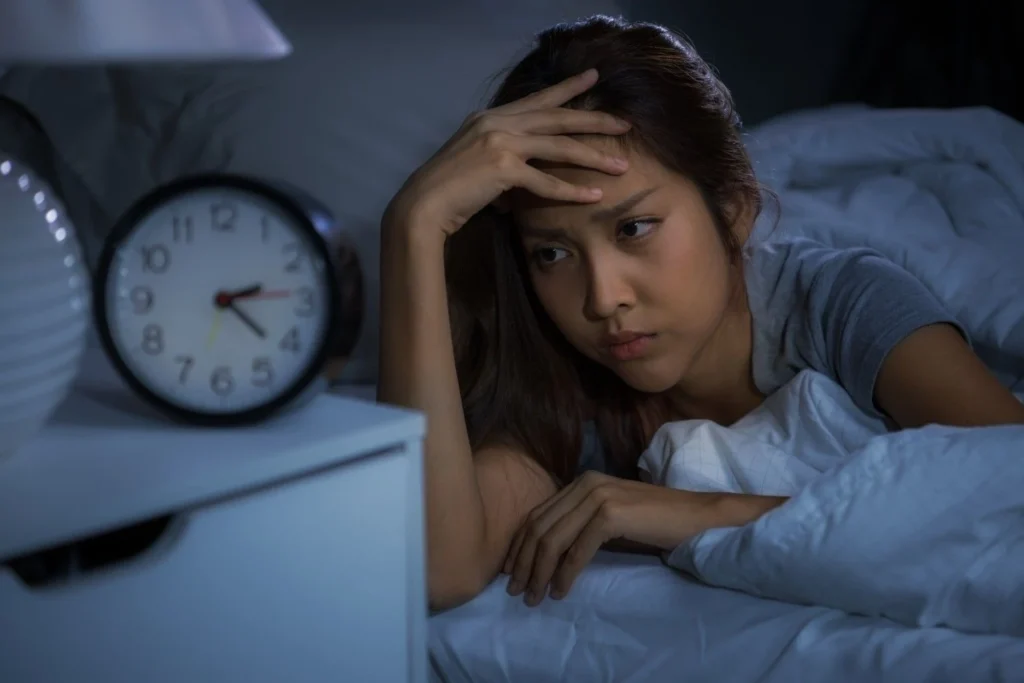




It’s 2 AM. The house is quiet. And out of nowhere, a heavy wave of sadness hits you. You ask yourself, why do I get sad at night and you have no clear answer. This happens to more people than you think. Nighttime can feel like the loneliest, heaviest part of the day. But there are real, science-backed reasons behind it. In this guide, you will find the exact causes and clear steps to feel better. You are not broken. Here is what is actually happening.
Many adults lie awake feeling a deep, unexplained sadness night after night. For some, it shows a low mood. For others, it is full-on crying for no clear reason. Understanding the cause is the first step toward healing and finding the right support, can change everything.
Is It Normal to Get Sad at Night? (Yes, Here Is Why)
Yes, it is completely normal. Feeling sad at night affects millions of people around the world. It is not a sign of weakness or failure. Your brain goes through real biological changes after the sun sets. Hormone levels shift. External distractions disappear. Quiet moments let unprocessed emotions rise to the surface. Research shows that our brains are wired to feel more emotionally vulnerable in the evening hours. This is not a character flaw. It is biology. That said, when feelings of sadness happen every night and start affecting your daily life, it is worth paying attention. Nighttime Depression is a recognized pattern and it is very treatable.
9 Reasons Why You Get Sad at Night
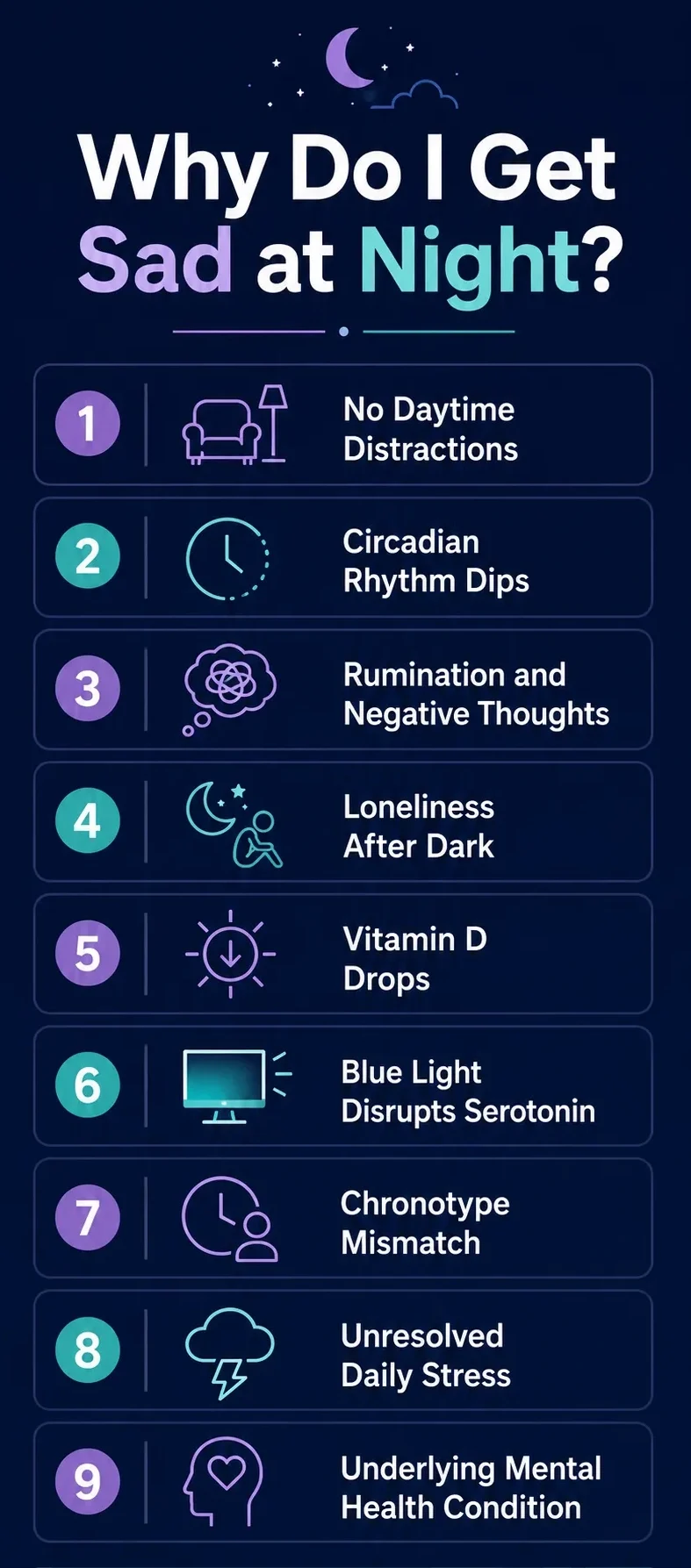
Here are the nine most common reasons why do I get sad at night. Each one is backed by research and real human experience.
1. No Daytime Distractions: Your Brain Finally Has Space to Process
During the day, your mind stays busy. Work, errands, phone calls, they all keep heavy thoughts at bay. At night, those buffers disappear. Your brain finally has the space to process everything you pushed aside. Emotions that were waiting in the background suddenly take center stage. This is why you can feel fine all day and then feel completely overwhelmed by 10 PM. It is not a malfunction. It is your brain doing its job just at a very inconvenient time.
2. Your Circadian Rhythm Naturally Dips in Mood at Night
Your body runs on circadian rhythms internal clocks that control sleep, hormones, and mood. In the evening, cortisol (your alertness hormone) drops. Melatonin rises to prepare your body for sleep. This natural hormonal shift can cause a mild dip in mood for many people. For those already prone to feelings of depression, this dip can feel much stronger. Your sleep schedule plays a major role in how deep this nightly dip becomes.
3. Rumination: The Endless Loop of Negative Thoughts
Negative Thoughts at night often turn into rumination replaying the same worries or regrets over and over. This mental loop is one of the biggest drivers of Nighttime Depression. Studies show that nighttime rumination is strongly linked to increased depression and poor sleep quality. When your mind has no task to focus on, it defaults to problem-solving mode. And if there are unresolved issues, it will chew on them endlessly. This is a core reason why many people ask, why do I get so sad at night.
4. Loneliness and Social Isolation Hit Hardest After Dark
Evenings are typically social times: dinner with family, calls with friends, connection. When you are alone, those empty hours remind you of what is missing. Feelings of loneliness spike at night because the world seems to shut down around you. Social media shows everyone else doing fun things, which makes the lonely sensation worse. This is especially hard if you recently moved, went through a breakup, or work long hours with little social contact.
5. Vitamin D Drops When the Sun Goes Down
Your body produces Vitamin D through sun exposure. Once night falls, that production stops. Low Vitamin D levels are directly linked to low mood, fatigue, and feelings of depression. If you already have low Vitamin D which is very common, nighttime can amplify those symptoms significantly. This is one of the lesser-talked-about reasons behind nightly sadness, but the science is solid.
6. Screens and Blue Light Disrupt Your Serotonin and Melatonin
Too much screen time before bed disrupts two key chemicals: serotonin and melatonin. Blue light from phones and laptops tricks your brain into thinking it is still daytime. This throws off your sleep patterns, delays melatonin release, and can lower serotonin levels all of which directly affect mood. Poor sleep quality leads to sleep deprivation, and sleep deprivation makes Anxiety Symptoms and sadness much worse the next night. It becomes a cycle.
7. You Are a Night Owl Fighting a 9-to-5 World (Chronotype Mismatch)
Not everyone is built for early mornings. If your natural chronotype is night-owl, your body clock runs later than the typical schedule. This creates a constant mismatch between when your body wants to sleep and when society demands you be awake. Irregular sleeping patterns from this mismatch cause chronic sleep deprivation and mood disruption. Many people who feel depressed at night are actually chronotype-mismatched not clinically depressed.
8. Unresolved Stress and Daily Frustrations Pile Up
Every day carries small stressors. A difficult conversation. A missed deadline. Financial pressure. During the day, you manage them one by one. But at night, they all land at once. The brain processes emotional experiences during downtime, so the unresolved stress of the day often hits hardest right before bed. This daily emotional buildup is a key driver of why do I feel sad at night for working professionals and caregivers.
9. An Underlying Mental Health Condition May Be Playing a Role
Sometimes nightly sadness points to something deeper. Conditions like major depressive disorder, Sleep Disorders, generalized anxiety, and mood disorder all tend to worsen in the evening hours. Anxiety Symptoms like racing thoughts and chest tightness often peak at night. Mental Health conditions do not take a break at bedtime in fact, the lack of distraction makes them louder. If this sounds familiar, know that depression treatment options are available and effective. Does depression ever go away? With the right support, yes many people fully recover.
Why Do I Get Sad at Night but Fine During the Day?
This is one of the most common questions people search, why do I get sad at night. The short answer: daytime busyness acts as a mask. When you are active and engaged, your brain’s attention is directed outward. There is simply no room for emotional processing. But at night, your brain shifts into what scientists call the Default Mode Network (DMN) a resting state where the mind turns inward. The DMN is linked to self-reflection, memory, and yes, rumination. It is in this state that negative thoughts rise up, unresolved feelings come forward, and why am I sad at night becomes a very real question. The sadness was not absent during the day. It was just waiting.
The 988 Suicide and Crisis Lifeline (call or text 988 in the US) is available 24/7 for anyone in crisis. Does depression ever go away with proper treatment? In most cases, yes. Early action leads to better outcomes.
Specific Situations That Make Nighttime Sadness Worse
After a Breakup or Heartbreak
Breakups hit differently at night. The bed feels empty. The silence is loud. Nights remove the activity that keeps grief at bay during the day. Emotional processing speeds up without distractions, making heartbreak feel overwhelming after dark.
Living Alone or in a New City
If you live alone or recently relocated, evenings can feel isolating. The absence of familiar people and routines deepens feelings of loneliness. New environments lack the comfort cues your brain uses to feel safe and calm.
After Scrolling Social Media Before Bed
Scrolling before bed does two things: it exposes you to curated highlight reels that trigger comparison, and the blue light disrupts melatonin. This combination creates an emotional low right at bedtime. Social comparison + screen time + disrupted sleep patterns is a recipe for sadness at night.
During Winter / Seasonal Affective Disorder (SAD)
Shorter days mean less sunlight, lower Vitamin D, and disrupted circadian rhythms. Seasonal Affective Disorder is a real mood disorder that causes increased depression during fall and winter months. Nights become longer and darker literally and emotionally.
How to Stop Getting Sad at Night: 7 Strategies That Actually Work
These are not vague tips. These are specific, proven strategies that address the root causes covered for why do I get sad at night.
1. Protect Your Circadian Rhythm (Light Exposure Routine)
Get bright natural light within 30 minutes of waking up. This sets your internal clock and improves mood throughout the day. In winter, consider a light therapy lamp. Healthy circadian rhythms are the foundation of stable mood and better sleep quality.
2. Build a Wind-Down Ritual That Replaces Rumination
Replace aimless nighttime thinking with a structured wind-down routine. This could include light reading, a warm shower, or a 5-minute breathing exercise. A consistent routine signals to your brain that it is safe to relax and it interrupts the Negative Thoughts loop before it starts.
3. Fix Your Sleep Hygiene (Specific, Actionable Steps)
Good sleep hygiene directly reduces nighttime sadness. Here is what actually works:
- Keep a consistent sleep schedule same bedtime and wake time every day
- Keep your room cool, dark, and quiet
- Avoid caffeine after 2 PM
- Do not lie in bed awake for more than 20 minutes get up and do something calm
4. Get Sunlight and Move Your Body During the Day
Exercise and sunlight are two of the most powerful natural antidepressants. Even a 20-minute walk outside raises serotonin, reduces cortisol, and improves sleep quality. This directly reduces how deeply you feel depressed at night.
5. Limit Social Media and Blue Light After 8 PM
Set a hard cut-off for screens at least one hour before bed. Use night mode if you must use devices. This protects your melatonin levels, reduces social comparison, and gives your brain a chance to decompress before sleep.
6. Try Journaling or the Brain Dump Method at Night
Write down everything on your mind before bed worries, to-dos, frustrations. This externalizes the mental noise and reduces rumination. Studies show that expressive journaling lowers Anxiety Symptoms and improves the ability to fall asleep faster.
7. Work With Your Chronotype, Not Against It
If you are a natural night owl, stop fighting it completely. Where possible, adjust your schedule slightly to match your chronotype. Reduce irregular sleeping patterns by shifting your bedtime gradually. Working with your biology instead of against it reduces chronic sleep deprivation and its downstream effects on mood.
5 Signs Your Nighttime Sadness Needs Professional Help
Most nightly sadness is manageable with lifestyle changes. But sometimes it signals something deeper. Here is a clear checklist to help you decide when to reach out:
- Sadness lasts more than two weeks with no clear cause
- You feel depressed at night and it is starting to affect your work or relationships
- You have thoughts of hopelessness or of harming yourself
- You experience physical symptoms: loss of appetite, unexplained fatigue, or inability to fall asleep
- You have tried lifestyle changes and nothing is working.
This is not a weakness, it is the smartest move you can make. Five signs of why do I get sad at night that help you to recover it.
At MRSC Solutions, we specialize in Depression Treatment West Palm Beach offering personalized, evidence-based care for adults experiencing Nighttime Depression, anxiety, and burnout. Our team of licensed professionals is here to help you move from surviving nights to thriving every day.
Conclusion
If you have been asking yourself, why do I get sad at night? you are not alone. Nighttime sadness is a common experience that can be influenced by stress, loneliness, disrupted sleep patterns, emotional exhaustion, or underlying mental health conditions. Start by implementing one or two healthy habits from this guide and give yourself time to notice positive changes over the next couple of weeks.
At MRSC Solutions, we provide compassionate, personalized mental health care to help you better understand your emotions and find effective treatment options. Contact us today to schedule an appointment and take the first step toward calmer evenings, better sleep, and improved emotional well-being.
FAQs
Why do I cry at night for no reason?
Your brain shifts into the Default Mode Network at night, which triggers emotional processing. Unresolved feelings and stress from the day surface when distractions are gone. This can cause sudden crying even when nothing obvious happened. Negative Thoughts and hormonal dips at night make it worse.
Is it depression or just nighttime sadness?
Nighttime sadness is occasional and tied to identifiable causes like stress or loneliness. Major depressive disorder involves persistent feelings of depression across most of the day for at least two weeks, along with other symptoms like loss of interest, fatigue, and hopelessness. If in doubt, consult a mental health professional.
Why do I feel lonely at night even when I am not alone?
Emotional loneliness is different from physical aloneness. You can be surrounded by people and still feel lonely if you feel misunderstood or disconnected. At night, when conversations slow down, this emotional gap becomes more obvious.
Does anxiety get worse at night?
Yes. Anxiety Symptoms often peak at night because there are fewer distractions to redirect your attention. Your cortisol levels drop but your mind is still active. This creates the ideal conditions for worry and negative thoughts to escalate.
Why do I feel better in the morning?
Cortisol naturally rises in the morning, which boosts alertness and mood. Daylight triggers serotonin production. You also have forward-looking tasks ahead, which shifts the brain away from rumination. The structure and stimulation of the day act as a natural mood support.